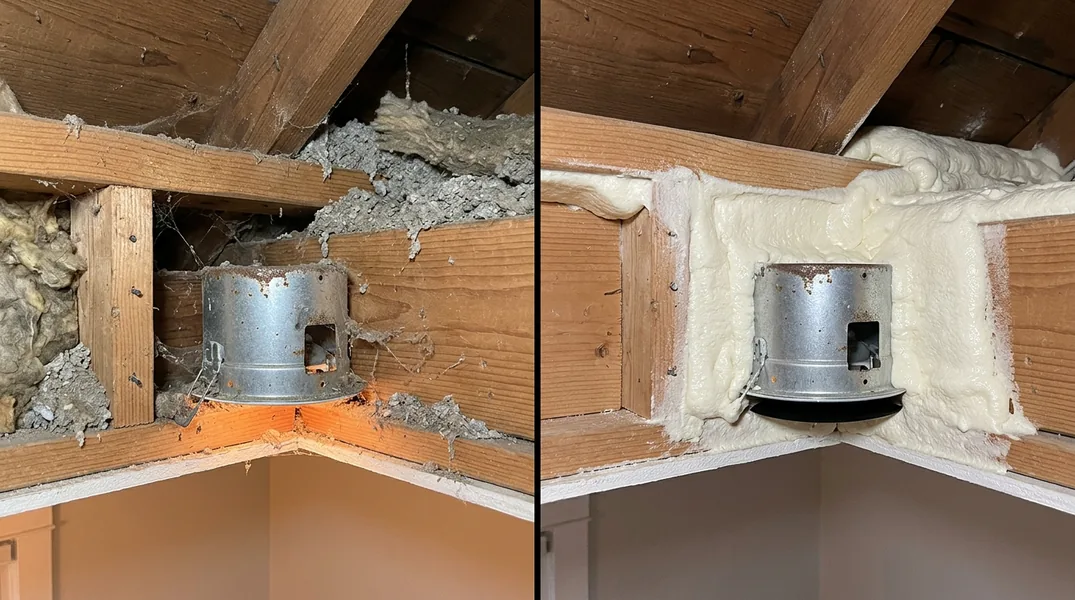
Spray Foam vs Blown-In Insulation: The Real Differences
When homeowners in Indianapolis start researching attic insulation upgrades, they quickly encounter two dominant options: spray foam and blown-in insulation. Both have legitimate advantages, but they work in fundamentally different ways, and understanding those differences is crucial before making a decision that could affect your home's comfort and energy bills for decades.
Attic Spray Foam Insulation expands as it's applied, creating a continuous air seal that fills gaps, cracks, and irregular spaces with precision. Blown-in insulation, whether fiberglass or cellulose, is mechanically distributed as loose fibers that settle into cavities. The spray foam approach creates both insulation and an air barrier simultaneously. Blown-in materials rely on proper depth and density to achieve their rated R-value, but they don't seal air leaks the way foam does. This distinction matters significantly in older homes or those with unusual framing, where air leakage is often the biggest energy culprit.
Spray Foam vs Fiberglass: Performance in Indianapolis Climates
Indianapolis experiences hot, humid summers and cold, sometimes severe winters. This climate puts real demands on insulation performance, especially in attics where temperature swings can be extreme. Fiberglass blown-in insulation is the most common choice in existing homes, partly because it's affordable and partly because it's what many contractors know best. However, fiberglass has a significant weakness: it doesn't stop air movement. If your attic has air leaks (and most do), heated or cooled air escapes right through the fiberglass, undermining its insulation value.
Spray foam, particularly Open Cell Spray Foam Insulation, seals those leaks while providing insulation. In Indianapolis's climate, where HVAC systems work hard during both seasons, eliminating air leakage can reduce energy consumption by 15 to 20 percent. That said, fiberglass is still a legitimate choice if your attic is already well-sealed and you're simply looking to increase R-value. The honest truth is that not every home needs spray foam, and a professional assessment can reveal whether your situation calls for the premium option.
Blown-In Insulation vs Cellulose: When a Top-Up Makes Sense
Many homes in Indianapolis already have some attic insulation, often from decades past. If your home has adequate air sealing (or if you address air leaks separately) but insufficient R-value, blown-in insulation might be the most cost-effective solution. Adding another 4 to 6 inches of blown cellulose or fiberglass over existing insulation can meaningfully improve performance without the expense of a full spray foam retrofit.
Cellulose blown-in insulation has gained popularity because it offers slightly better R-value per inch than fiberglass and is made from recycled paper, appealing to environmentally conscious homeowners. However, cellulose settles over time and can absorb moisture, which is a real concern in humid climates like Indianapolis. Fiberglass doesn't settle as much and resists moisture better, but it allows more air movement. The decision between these two often comes down to your existing conditions: if your attic is already relatively dry and well-ventilated, either works. If you suspect moisture issues or live in a particularly humid area, fiberglass may be the safer choice for a top-up application.
Spray Foam vs Cellulose: The Moisture and Durability Question
One of the most important conversations we have with Indianapolis homeowners involves moisture and long-term durability. Closed Cell Spray Foam Insulation is a vapor barrier itself, meaning it prevents moisture from moving through the insulation layer. This is a major advantage in humid climates and in homes with chronic moisture issues. Cellulose, by contrast, can absorb and hold moisture, which over time can lead to mold growth, settling, and reduced effectiveness. If your attic shows any signs of moisture problems, spray foam is almost always the better long-term investment.
Durability is another consideration. Spray foam, once cured, remains stable for the life of your home. It doesn't settle, doesn't degrade from UV exposure (if protected from direct sunlight), and maintains its R-value indefinitely. Cellulose and fiberglass can both degrade over time, especially if disturbed or exposed to moisture. In an attic that experiences temperature extremes like those in Indianapolis, this stability becomes increasingly valuable. That said, spray foam's upfront cost is higher, so this durability advantage only matters if you plan to stay in your home long enough to recoup the investment through energy savings.
Best Insulation for Attic: Assessing Your Specific Situation
The honest answer to 'what's the best insulation for my attic' depends entirely on your home's current condition, your budget, and your long-term plans. If you're building new or doing a complete attic renovation, spray foam is often the superior choice because it solves both insulation and air sealing in one step. If you're adding insulation to an already-adequate, well-sealed attic, a blown-in top-up is perfectly sensible and much more budget-friendly. If your attic shows moisture issues or you've had energy problems despite existing insulation, spray foam's air-sealing and moisture-resistant properties make it worth the investment.
The best approach is to have a professional energy audit or insulation assessment. A qualified contractor can measure your current R-value, identify air leaks, check for moisture, and recommend the solution that actually fits your situation rather than just selling you the most expensive option. That's the approach Indianapolis Spray Foam Insulation takes: we assess your home honestly and tell you what will genuinely improve your comfort and efficiency. Sometimes that's spray foam. Sometimes it's a strategic blown-in top-up. Sometimes it's addressing air leaks first, then adding insulation second.
Attic Spray Foam Insulation Cost in Indianapolis: What to Budget
Cost is a legitimate concern, and spray foam is more expensive than blown-in insulation on a per-square-foot basis. Typical pricing for spray foam in the Indianapolis area ranges from $1.50 to $2.50 per board foot, depending on the type (open cell vs. closed cell) and your attic's complexity. A 1,000-square-foot attic at 5 inches of open cell foam might cost $3,500 to $4,500. Blown-in insulation typically runs $0.50 to $1.00 per square foot, making a similar attic project $500 to $1,500. That's a significant difference, and it's why many homeowners choose blown-in, especially for top-up projects.
However, the cost comparison should include energy savings. Spray foam's air-sealing properties often deliver energy savings of 10 to 20 percent, while blown-in insulation alone (without air sealing) typically saves 5 to 10 percent. Over 10 to 15 years, those savings can add up substantially. Additionally, spray foam's durability means you won't need to replace or add more insulation in 20 years the way you might with blown-in materials. To understand what makes sense for your budget and timeline, contact Indianapolis Spray Foam Insulation for a free estimate. We'll break down the costs and savings specific to your home so you can make an informed decision. Call us at (463) 285-8584 to schedule your assessment.
Looking for a professional spray foam insulation contractor in Indianapolis? Indianapolis Spray Foam Insulation responds fast for all your spray foam insulation needs.
Get a Free Quote