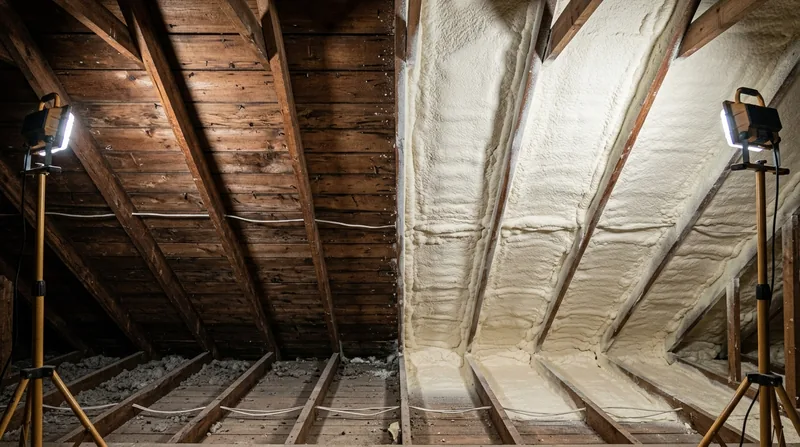




Insulation Replacement & Re-Insulation in Indianapolis is the full reset: old material removed, gaps air-sealed, new foam installed to current code R-values. Indianapolis homes face a brutal climate cycle. Winter nights drop below zero, ice dams soak attics, and frozen crawl spaces crack pipes. Summer humidity and 90-degree heat drive moisture back through aging insulation. The result is flattened fiberglass, mouse-fouled batts, water-stained foam, and energy bills that climb every year. Whether your attic insulation collapsed under snow load, your crawl space flooded, or your old blown-in simply stopped working after two decades, the answer is a complete removal and re-insulation to current code. We remove the failed material, seal every air leak, and install new spray foam or blown-in insulation sized to your home and your local climate zone.
Why Insulation Replacement & Re-Insulation Matters in Indianapolis Homes
Indianapolis sits in Climate Zone 5, where real cold meets real humidity. The city's housing stock tells the story: Victorian balloon-frames inside the loop with empty walls and sagging attics; 1950s ranches on crawl spaces with original insulation compressed to half its R-value; newer two-stories with vaulted great rooms and bonus rooms that leak heat like sieves. Ice dams are not rare events here, they are winter routine. A single ice dam leak can soak an attic, destroy insulation, rot framing, and cost thousands in repairs. Flattened fiberglass holds moisture. Mice nest in old batts and leave urine and feces that compromise both thermal and air quality. Crawl spaces with standing water or high humidity breed mold and rot rim joists and band joists. After fifteen or twenty years, insulation simply stops doing its job.
- We remove all failed insulation, old batts, compressed blown-in, water-damaged foam, and rodent-fouled material in one trip.
- We air-seal every penetration, rim joist, band joist, and rim band before new insulation goes in, stopping the leaks that old insulation never addressed.
- We install new spray foam or blown-in insulation to the R-value required by the 2023 Indiana Energy Code for your zone and your assembly.
- We handle permits, inspections, and code compliance so you do not have to.
A complete insulation replacement stops the ice dams, the cold floors, the hot attics, and the energy waste that older homes build in.
Key info: Indianapolis homes built before 1980 often have no insulation in exterior walls at all. Wall injection foam retrofit is a separate service that adds R-value without tearing down drywall, and it pairs perfectly with attic replacement on a full-home energy reset. See our wall and injection foam insulation page for details.
For permitting questions specific to your address, contact the Indianapolis Department of Metropolitan Development Building Permits office or your local township building department.
How Insulation Replacement & Re-Insulation Works in Indianapolis
The job breaks into clear steps: we inspect the existing insulation and air barriers, we remove all old material to the substrate, we air-seal every gap and penetration, and we install new insulation to code. In Indianapolis attics, we typically find a mix of original batts, settled blown-in, and patches of foam added over the decades. In crawl spaces, we find wet insulation, rotted rim joists, and sometimes standing water. In walls, we find empty cavities. We remove everything to the framing, air-seal with spray foam at rim bands and band joists, seal all ductwork penetrations and pipe chases, and install new material. The entire process takes one to three days depending on the size of the home and the complexity of the air sealing.
- We inspect the attic, crawl space, or wall cavity and take measurements to determine R-value and material volume needed.
- We remove all existing insulation and haul it away; we do not leave old material under new foam.
- We air-seal every rim band, band joist, ductwork penetration, electrical chase, and rim joist with spray foam or caulk.
- We install new closed-cell or open-cell spray foam, or blown-in fiberglass, to the R-value required by code for your zone.
- We perform a final walkthrough, document R-values and thickness, and provide a written estimate with specifications.
On a typical Fishers or Carmel two-story with a 2,000-square-foot attic, removal and re-insulation with closed-cell foam takes two days and stops ice dams and heat loss in one shot.
Example job: A 1960s ranch in Lawrence with a crawl space on a wet season and a furnace that ran constantly. We removed 4 inches of wet fiberglass, air-sealed the rim band and all band joists with closed-cell spray foam, installed 3 inches of closed-cell foam over the rim band (R-19 equivalent), and blown-in open-cell in the floor cavity above. Floor temperature rose 12 degrees, heating bills dropped 18 percent, and no more mold smell. The job took one day.
Learn more about our air sealing service and how it pairs with replacement insulation to stop air leaks that fiberglass alone cannot address.
Insulation Replacement Methods
| Approach | Description | Best for |
|---|---|---|
| Closed-Cell Spray Foam | High-density foam installed at 1.5 to 2 pounds per cubic foot; R-value 6 to 7 per inch; moisture barrier and air seal in one application; cures rigid and structural. | Rim bands, band joists, crawl spaces, attics in wet climates, metal buildings, sealed roof decks, and any assembly where moisture control is critical. |
| Open-Cell Spray Foam | Low-density foam installed at 0.5 pounds per cubic foot; R-value 3.5 per inch; air seal only, not a moisture barrier; cures soft and absorbs sound; lower cost than closed cell. | Attic insulation in dry climates, bonus rooms, vaulted ceilings, garage ceilings, and sound dampening; not suitable for crawl spaces or rim bands in wet conditions. |
| Blown-In Fiberglass | Loose-fill cellulose or fiberglass blown into cavities at R-3.2 to R-3.6 per inch; no air seal; settles over time; does not fill irregular spaces. | Attic top-ups on sound existing insulation, wall cavities in retrofit work where foam is not feasible, and budget-conscious attic replacements in dry conditions. |
| Closed-Cell + Blown-In Hybrid | Closed-cell foam at rim bands and band joists for moisture control and air seal; blown-in or open-cell in the field for cost efficiency and faster installation. | Crawl spaces with finished basements above, attics with vaulted sections, and homes where air sealing at rim is the priority and field insulation is secondary. |
The right approach depends on your home's assembly, your climate zone, moisture history, and budget. We recommend closed-cell for rim bands and band joists in all Indianapolis homes because the moisture and air-seal benefits justify the cost. For attics, open-cell or blown-in is often the right answer unless you have a history of ice dams or water intrusion.
Insulation Replacement & Re-Insulation Cost in Indianapolis: What to Expect
Insulation replacement cost depends on the size of the space, the type of material, the complexity of air sealing, and whether removal is simple or involves contaminated or water-damaged material. A typical attic replacement in Indianapolis runs from $2,800 to $8,500. A crawl space replacement with closed-cell foam at rim bands and open-cell in the field runs from $3,200 to $10,000. A full-home wall injection foam retrofit runs from $4,500 to $15,000 depending on square footage and wall cavity depth. Travel and estimates are free. We provide a written estimate with R-value and thickness specifications before any work begins.
- Attic size is the biggest driver: a 1,200-square-foot attic costs less to insulate than a 2,500-square-foot attic, and the R-value specified by code affects material volume and labor time.
- Access and complexity matter: attics with many obstructions, ductwork, and electrical chases take longer to air-seal and cost more than simple rectangular spaces.
- Removal cost varies: if old insulation is clean and dry, removal is fast; if it is wet, moldy, or mouse-fouled, disposal and decontamination add time and cost.
- Material choice is significant: closed-cell spray foam costs more per board foot than open-cell or blown-in, but delivers higher R-value and air sealing in one pass.
- Permit and inspection fees are your responsibility, but we help you navigate what applies at your address and coordinate with your local building department.
For detailed pricing examples and a free estimate, visit our pricing page or call (463) 285-8584.
What to Look for When Hiring a Spray Foam Insulation Contractor Near Me in Indianapolis
Spray foam insulation is a technical trade. A bad installation ruins a home. The difference between a professional shop and a rig-and-run crew shows up in the estimate, the process, and what happens six months later. Here is how to hire the right contractor for insulation replacement and re-insulation in Indianapolis and the surrounding area.
- Ask for a written estimate that specifies R-value, foam thickness in inches, square footage, and the material type (closed-cell or open-cell); an estimate with no specifications is a red flag.
- Verify that the contractor is fully insured and ask to see a certificate of insurance; do not accept verbal assurance or a promise to email it later.
- Ask about the cure process: mechanical ventilation during application, a stated re-entry window of 24 to 48 hours, and a plan to manage odor and off-gassing are signs of a professional shop.
- Get references from recent jobs in Indianapolis or nearby suburbs like Carmel, Fishers, or Greenwood, and contact at least two homeowners to ask about their experience.
- Confirm that the contractor will help you navigate permitting and coordinate with your local building department; if they say "permits are not needed", walk away.
- Ask about the warranty: a workmanship warranty of one to three years on the installation is standard; do not accept promises of lifetime warranties or guaranteed energy savings.
- Check that the contractor is willing to walk away from a job if the substrate is wet, contaminated, or leaking; foam installed over a wet crawl space or a leaking roof is a waste of money and a liability.
For a free, no-obligation estimate from a local Indianapolis spray foam contractor, contact us online or call (463) 285-8584. We will inspect your space, answer your questions, and provide a written estimate with specifications.
Insulation Replacement & Re-Insulation in Indianapolis: Pricing Guide
| Service | Price | Details |
|---|---|---|
| Attic Insulation Replacement | Starting at $2,800 | Removal and re-insulation of 1,200 to 1,600 square feet; includes air sealing at rim band and basic penetrations; material and labor; final R-value to code |
| Crawl Space Replacement with Rim Sealing | Starting at $3,200 | Closed-cell foam at rim band and band joists for moisture control and air seal; open-cell or blown-in in field; removal of old material; typical 800 to 1,200 square feet |
| Wall Injection Foam Retrofit | Starting at $4,500 | Exterior wall cavity injection in pre-1980 homes with no insulation; price depends on linear feet and wall height; typical single-story home, 1,500 to 2,000 linear feet |
| Complex or Large-Scale Job | On estimate | Homes over 3,000 square feet, multiple zones, extensive water damage, or contaminated material; requires on-site inspection before pricing |
| Travel and Estimate | Free | No mileage fee or travel charge within Indianapolis and all surrounding service areas; free written estimate with specifications within 24 hours |
Indicative pricing, the exact cost depends on square footage, finish, and site access. Free personalized estimate within 24h at (463) 285-8584.


