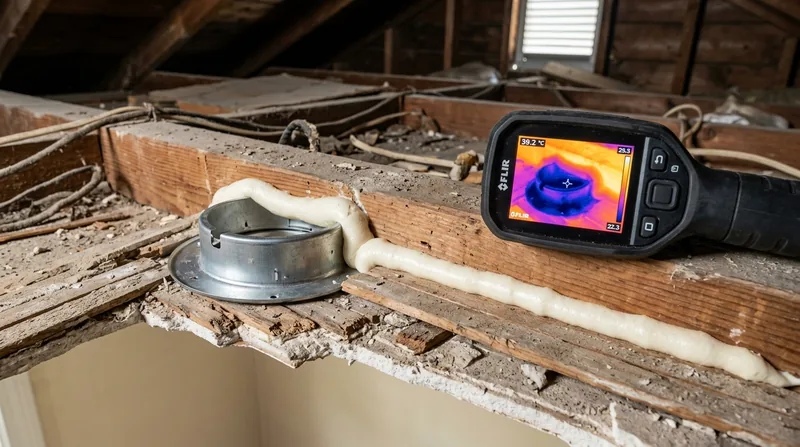




Indianapolis sits on flat central Indiana till with homes split between basements in the older core and vented crawl spaces almost everywhere built after World War II. Above them all sit attics that bake at 130 to 150 degrees Fahrenheit in July and drop below zero in January. Top plates, can lights, chimney chases and attic hatches leak more heated air than most walls. That warm leak is what builds ice dams every winter across Irvington, Fountain Square, the Old Northside, Broad Ripple and the 1950s ranch belts of Lawrence, Speedway and Beech Grove. Air sealing in Indianapolis stops that leak before it freezes, and it is the cheapest comfort fix you can make. We seal the leak points first, then insulate, and the result is a warm attic in January and no ice dam in February.
Why Air Sealing Matters in Indianapolis Homes
Indianapolis winters turn attic leaks into ice dams. Warm air escapes through unsealed top plates and around can lights, travels into the cold roof deck, melts snow at the eave, and refreezes at the gutter line. The dam backs water under the shingles and into the walls. The fix is not more insulation. The fix is to seal the leak first. Attics in older Victorians and foursquares in Meridian-Kessler, Butler-Tarkington and Fletcher Place suffer worst because balloon framing and finished half-story spaces create dozens of leak points. New construction in Carmel, Fishers, Westfield and Zionsville builds bonus rooms and vaulted great rooms over three-car garages, and every one of those cathedral ceilings leaks at the top plate and soffit unless sealed tight.
- We locate and seal every leak point before insulating, so the insulation sits on a controlled air boundary and works as designed.
- Top plates and rim joists in crawl spaces and basements leak cold into the living space in winter, and we seal them to stop that transfer.
- Attic hatches and access doors are almost never sealed, and they alone can leak more air than a whole wall, so we address every opening.
- Can lights, exhaust penetrations and chimney chases create thermal bridges and air leaks that insulation alone cannot fix, and sealing them stops both.
- A sealed attic reduces the load on your heating system and cuts the risk of frozen pipes in crawl spaces and basements during sub-zero nights.
Air sealing is the foundation of any insulation retrofit in the Indianapolis climate, and it pays back in the first winter.
Key info: Indianapolis sits in climate zone 5 with real cold, sub-zero nights and 90 degree humid summers. Vapor drive flips with the seasons, so every assembly must handle both. A sealed attic in an older Irvington Victorian stops winter heat loss and summer cooling loss alike. See the Indiana Department of Energy Development website for climate zone guidance and code requirements at your address.
How We Seal Air Leaks in Indianapolis Attics and Crawl Spaces
We start with a walk-through to map every leak point. Top plates where the exterior wall meets the attic floor are the biggest culprit. We seal them with spray foam or caulk. Can lights are sealed around the fixture and the housing. Chimney chases and plumbing vents get sealed at the penetration. Attic hatches get weatherstripped or sealed shut. Then we insulate. The order matters. Sealing first means the insulation sits on a controlled boundary and the R-value performs as rated. We also seal rim and band joists in crawl spaces and basements, because that is where cold air enters in winter and where warm air leaks out in summer. Every job gets a written estimate with the specific leak points named, the materials we use, and the expected result.
- We inspect the attic or crawl space and identify every air leak, including top plates, can lights, chimney chases, plumbing vents and attic hatches.
- We seal the leak points with spray foam, caulk or weatherstripping, depending on the size and location of the opening.
- We verify the seal by checking airflow and looking for any gaps or voids that could still leak.
- We then insulate the sealed attic or crawl space with spray foam or blown-in insulation, so the thermal boundary is complete and the R-value is effective.
- We leave the job clean and document the work with photos and a final report showing what was sealed and what R-value was installed.
A typical attic air sealing job in Indianapolis takes one day and involves sealing 10 to 20 leak points before insulating. See our attic spray foam insulation page for details on the insulation portion of the retrofit.
Local example: A 1920s foursquare in Broad Ripple has a finished half-story bedroom with a knee wall and a sloped ceiling. The top plate of the exterior wall is open to the attic above. Warm air leaks into the attic in winter, rises to the roof deck, and melts snow at the eave, causing an ice dam that backs water into the bedroom wall. We seal the top plate with spray foam, seal the can lights and the chimney chase, weatherstrip the attic hatch, and then blow in open cell insulation. The ice dam stops. The bedroom stays warm. The job costs from $650 for the sealing alone, plus the cost of insulation.
| Approach | Description | Best for |
|---|---|---|
| Spray foam sealing | Closed cell or open cell foam applied to top plates, rim joists, can lights and penetrations to seal and insulate in one step. | Attics, crawl spaces, rim joists and any air leak that also needs insulation value. |
| Caulk sealing | Polyurethane or silicone caulk applied to small cracks, gaps and penetrations to stop airflow without adding R-value. | Small gaps around wiring, plumbing, electrical boxes and minor penetrations where insulation is not needed. |
| Weatherstripping | Foam tape or rubber seal applied around attic hatches, access doors and moveable penetrations to stop air leakage. | Attic hatches, access doors, pull-down stairs and any opening that moves or is accessed regularly. |
| Rim joist and band joist sealing | Spray foam applied to the rim and band joist in basements and crawl spaces to seal the air boundary where the foundation meets the house frame. | Basements and crawl spaces in all Indianapolis homes, especially 1950s and 1960s ranches on crawl spaces with cold floors. |
Air Sealing Cost in Indianapolis: What to Expect
Air sealing costs in Indianapolis start at $650 for a basic attic top plate and can light sealing job in a small home. A larger attic with multiple penetrations, rim joist sealing in a crawl space, and attic hatch weatherstripping runs $1,200 to $2,500. The cost depends on how many leak points need sealing, whether you are sealing an attic, a crawl space or both, the materials used (spray foam, caulk or weatherstripping), and the accessibility of the work. A 1920s foursquare in Irvington with a finished half-story, multiple can lights and a chimney chase costs more than a 1950s ranch with a simple attic and no penetrations. We always give a written estimate with the specific leak points named and the materials listed, so you know what you are paying for. Getting two or three estimates from different contractors is smart, because the price and the scope can vary widely.
The best time to get an air sealing estimate is in the fall, before the heating season starts. If you have an ice dam in winter or cold floors in a crawl space, call us and we will fit you in as soon as we can. See our pricing page for more detail on what different scopes cost and what affects the price.
What to Look for When Hiring an Air Sealing Contractor Near Me in Indianapolis
When you call an air sealing contractor, ask for a written estimate that names the specific leak points, describes the materials used, and lists the R-value or thickness of any insulation to be installed. Ask whether the contractor is fully insured and ask to see the certificate. Ask for references from recent jobs in Indianapolis, Carmel, Fishers or Noblesville, and call them. Ask whether the contractor will pull any permits required by your city or whether you need to do that yourself. Permitting for air sealing and insulation varies from city to city across Greater Indianapolis, so always check with your local building department about what applies at your address. If you have an HOA, ask whether the architectural rules govern any exterior work on your home or on a metal building, because some master-planned communities in Carmel, Westfield and Zionsville do. Most air sealing is interior work and does not require a permit, but attic access, mechanical ventilation during spray foam cure, and the fifteen-minute thermal barrier distinction are governed by the energy and building code in force at your address. A good contractor will explain what applies and will defer to your local building official, never guess. Call us at (463) 285-8584 and we will give you a free estimate, explain what we find, and answer your questions about permits and regulations at your address. See our contact page to schedule.
Air Sealing in Indianapolis: Pricing Guide
| Service | Price | Details |
|---|---|---|
| Basic attic air sealing | Starting at $650 | Top plates, can lights and attic hatch sealing in smaller homes or simple attics with few penetrations |
| Attic plus crawl space sealing | Starting at $1,200 | Combination of attic top plate, can light and penetration sealing plus rim and band joist sealing in basement or crawl space |
| Comprehensive retrofit with insulation | Starting at $1,800 | Complete air sealing of attic, crawl space or both, plus spray foam or blown-in insulation to bring R-value to code |
| Large or complex job | On estimate | Multi-story homes, finished half-stories, multiple chimneys or extensive rim joist work require on-site inspection for accurate pricing |
| Travel | Included | No separate mileage or call-out fee for Indianapolis and surrounding areas including Carmel, Fishers, Noblesville and Westfield |
| Estimate | Free | Written estimate with specific leak points named and materials listed, response within 24 hours at (463) 285-8584 |
Indicative pricing, the exact cost depends on square footage, finish, and site access. Free personalized estimate within 24h at (463) 285-8584.


