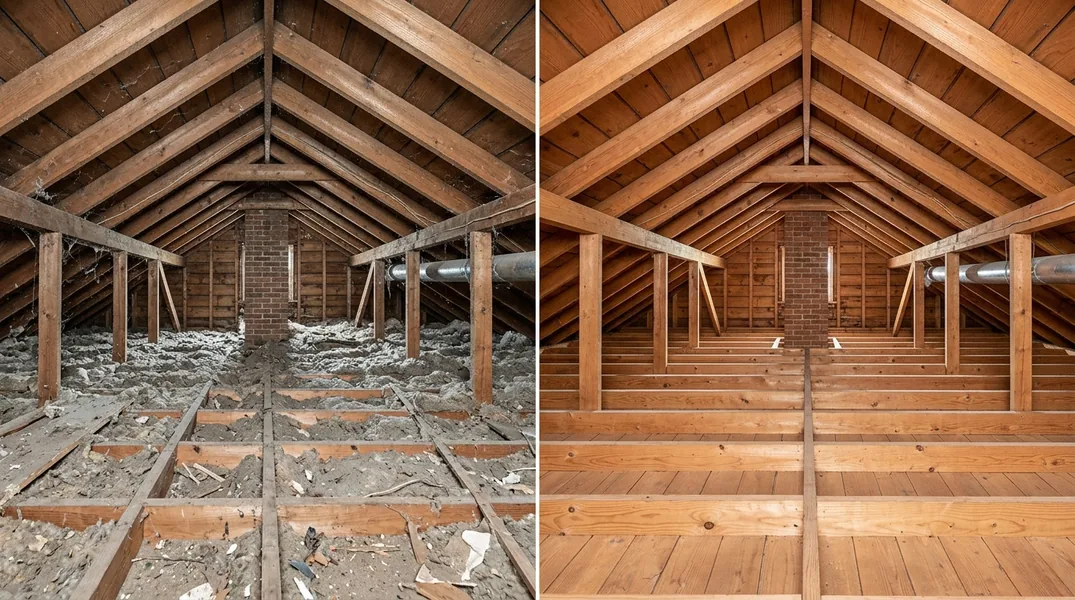
Understanding Spray Foam: Open-Cell vs Closed-Cell
When homeowners in Indianapolis begin researching spray foam insulation, one question dominates the conversation: should I choose open-cell or closed-cell? Both are legitimate options, but they work differently and serve different purposes. Understanding the fundamental differences between these two types of spray foam is the first step toward making an informed decision for your home.
Open-cell spray foam is a lighter, more flexible material that expands significantly after application. Think of it as a sponge with tiny air pockets that remain open to one another. Closed-cell spray foam, by contrast, is denser and more rigid. Its cells are completely sealed, creating a continuous barrier against air and moisture. These structural differences drive everything else about how each material performs in your home.
Open-Cell Spray Foam: Benefits and Limitations
Open Cell Spray Foam Insulation has become increasingly popular among homeowners seeking an affordable insulation upgrade. The material is less expensive to install than its closed-cell counterpart, which makes it attractive for budget-conscious families. Open-cell foam also offers excellent sound dampening properties, making it ideal if you want to reduce noise transmission between rooms or from outside.
However, open-cell foam comes with important trade-offs. Because its cells remain open, the material is vapor-permeable, meaning it allows moisture to pass through. This characteristic makes it less suitable for basements or crawl spaces where moisture control is critical. Additionally, open-cell foam has a lower R-value per inch compared to closed-cell alternatives, typically ranging from R-3.5 to R-3.8 per inch. For homeowners in Indianapolis with limited attic space, this lower insulating power per inch means you may need thicker applications to achieve your desired thermal resistance.
Closed-Cell Spray Foam: Superior Performance and Higher R-Value
Closed Cell Spray Foam Insulation represents the premium option in spray foam technology. The defining advantage is its exceptional insulating performance. The closed cell spray foam R value typically ranges from R-6 to R-7 per inch, nearly double that of open-cell foam. This superior thermal resistance means you need less material to achieve the same insulation level, making it especially valuable when space is limited.
Beyond insulation value, closed-cell foam creates an air and moisture barrier in one application. This dual functionality makes it the preferred choice for attics, crawl spaces, and exterior walls where moisture infiltration poses a risk. The material is also more rigid and structurally sound, providing additional bracing to your home's framing. For homeowners in Indianapolis dealing with harsh winters and humid summers, this moisture resistance is a genuine advantage. The trade-off is cost: closed-cell foam typically costs 50 to 100 percent more than open-cell alternatives, though many homeowners find the long-term energy savings justify the initial investment.
Spray Foam R-Value: What Number Actually Matters for Your Home
The term spray foam R value refers to thermal resistance, measured in R-units per inch of thickness. Higher numbers indicate better insulation performance. However, R-value alone should not drive your decision. The right R-value depends on your climate zone, the specific location you are insulating, and your energy goals.
The U.S. Department of Energy provides climate-based insulation recommendations, and Indianapolis falls within a zone that typically benefits from R-38 to R-60 in attic spaces, depending on your exact location and heating/cooling system. If you choose open-cell foam at R-3.6 per inch, you would need roughly 12 to 17 inches of material to reach R-43. With closed-cell foam at R-6.5 per inch, you could achieve R-43 with just 6 to 7 inches. In attics with limited clearance or existing obstructions, closed-cell foam's efficiency becomes a practical advantage. Conversely, if you have plenty of attic depth and budget is your primary concern, open-cell foam delivers adequate performance at a lower cost.
Attic Spray Foam Insulation Cost in Indianapolis: What to Budget
When considering Attic Spray Foam Insulation, homeowners naturally want to understand the financial commitment. Open-cell spray foam typically costs between $0.50 and $1.50 per board foot, while closed-cell foam ranges from $1.00 to $3.00 per board foot or more. For a typical 1,500 square-foot attic, open-cell insulation might run $2,000 to $4,000, whereas closed-cell could cost $4,000 to $8,000 or higher, depending on thickness and local market factors.
These figures are not fixed, and actual pricing varies based on attic accessibility, existing insulation removal requirements, and the complexity of your space. Indianapolis Spray Foam Insulation recommends obtaining a free estimate to understand costs specific to your home. Many homeowners recoup their investment through reduced heating and cooling bills within 5 to 10 years, and the energy savings continue for the life of the foam, which can exceed 30 years. Additionally, improved insulation may qualify you for utility rebates or tax credits, further offsetting the initial expense.
Which Type is Right for Your Indianapolis Home?
Choosing between open-cell and closed-cell spray foam ultimately depends on your priorities, budget, and specific home conditions. If you are insulating a dry attic with adequate space and want the most cost-effective solution, open-cell foam is a solid choice. It provides meaningful energy efficiency improvements and excellent sound control at a reasonable price point. However, if your attic has moisture concerns, limited clearance, or you want maximum thermal performance and long-term durability, closed-cell foam justifies its premium cost.
The best approach is to consult with a qualified professional who can evaluate your home's unique characteristics. Indianapolis Spray Foam Insulation has served homeowners throughout the area with honest assessments and expert installation. Whether your project calls for open-cell or closed-cell foam, our team can guide you toward the solution that delivers the best value for your specific situation. Contact us at (463) 285-8584 to schedule your consultation and receive a customized recommendation for your home.
Looking for a professional spray foam insulation contractor in Indianapolis? Indianapolis Spray Foam Insulation responds fast for all your spray foam insulation needs.
Get a Free Quote