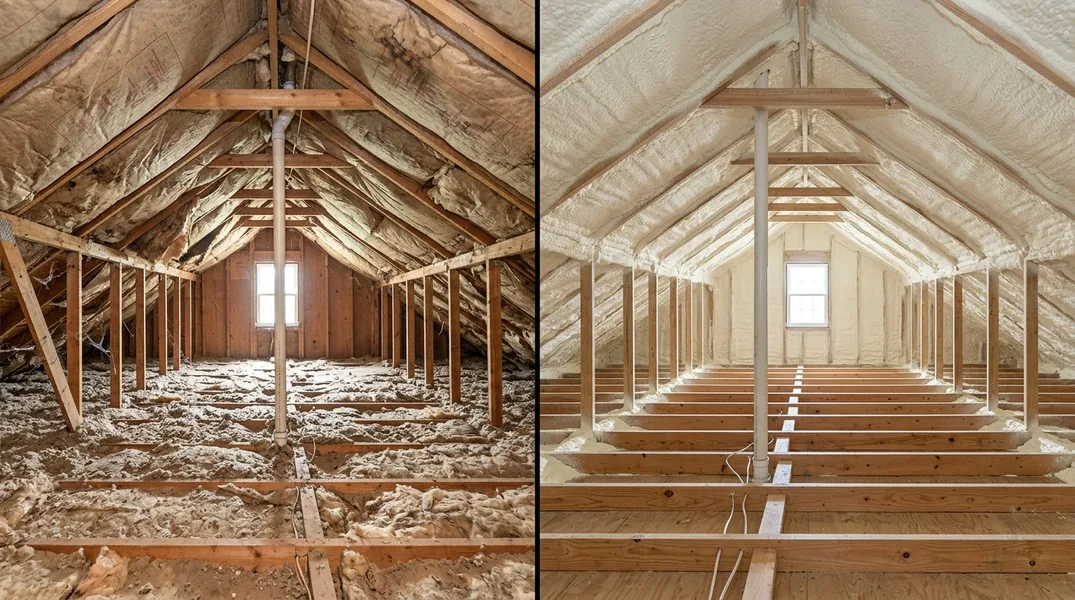
Why Old Insulation Removal Matters Before Spray Foam Installation
When homeowners in Indianapolis decide to upgrade their attics with modern insulation, many wonder whether they can simply spray foam over existing materials. The short answer is: it depends, but in most cases, removing old insulation first is the smarter choice. Old insulation can harbor moisture, dust, pests, and mold that compromise the performance of new spray foam and create health risks for your family.
Spray foam insulation works by creating an air-tight seal and expanding to fill every cavity and gap. When you apply it over deteriorated fiberglass, cellulose, or mineral wool, you're essentially trapping problems beneath a new layer. Moisture that was already present gets sealed in, potentially leading to rot, mold growth, and structural damage over time. Additionally, old insulation that has settled, compressed, or become contaminated won't provide a clean surface for proper foam adhesion, reducing the effectiveness of your new Attic Spray Foam Insulation system.
Signs Your Attic Insulation Needs to Be Removed
Before deciding on insulation removal, you need to assess the current condition of what's in your attic. Several red flags indicate that old insulation should come out before new spray foam goes in. If you notice visible mold growth, dark stains, or a musty odor, these are clear signs of moisture problems. Rodent droppings, nesting materials, or pest damage also suggest contamination that removal can address. Compressed, sagging, or clumping insulation has lost its R-value and won't benefit from being covered up.
Another critical concern is vermiculite insulation, a common material used in older homes throughout Indianapolis. Vermiculite can contain asbestos, a hazardous material that poses serious health risks if disturbed. If your attic contains vermiculite insulation, professional removal is not optional, it's essential. Similarly, if your existing insulation is wet, has been damaged by water intrusion, or shows signs of pest infestation, removal is the responsible choice. A professional inspection can identify these issues and recommend whether removal is necessary before your spray foam project begins.
The Health and Safety Risks of Leaving Old Insulation in Place
Many homeowners underestimate the health implications of leaving old insulation beneath new spray foam. Asbestos, commonly found in vermiculite and some older fiberglass products, is a carcinogen that can cause mesothelioma, lung cancer, and asbestosis when fibers are inhaled. Even if the material is undisturbed, applying heat and pressure from spray foam installation can dislodge fibers and spread them through your home's air system. This is why professional removal by trained technicians following proper containment and disposal protocols is crucial.
Beyond asbestos, old insulation accumulates dust mites, mold spores, and allergens that affect indoor air quality. If you or family members suffer from allergies, asthma, or respiratory sensitivities, these contaminants can trigger symptoms. Pest droppings in old insulation carry pathogens and bacteria that pose additional health risks. By choosing to remove old insulation before installing new spray foam, you're not just improving energy efficiency, you're creating a healthier living environment for everyone in your home. This investment in removal pays dividends in reduced health risks and better long-term performance of your insulation system.
Insulation Removal Cost in Indianapolis: What to Budget
Understanding pricing for insulation removal helps you make an informed decision about your project. The cost of old insulation removal in Indianapolis typically ranges from $800 to $2,500, depending on several factors. The size of your attic, the type of insulation being removed, the accessibility of the space, and whether hazardous materials like asbestos are present all affect the final cost. Loose-fill insulation like cellulose or fiberglass is generally faster and less expensive to remove than batts or blown-in materials that have settled and compacted over decades.
If your attic contains vermiculite insulation suspected of containing asbestos, expect higher removal costs due to the specialized equipment, containment procedures, and certified disposal required. Many removal companies charge between $1.50 and $3.00 per square foot for standard insulation removal, while hazardous material removal can run $3.00 to $5.00 per square foot or higher. While this seems like an additional expense, it's important to view it as an investment in the longevity and performance of your new spray foam system. Skipping removal might save money upfront, but it often leads to costly repairs and reduced efficiency down the road. Contact Indianapolis Spray Foam Insulation at (463) 285-8584 to discuss your specific situation and get an accurate estimate.
The Removal Process: What to Expect
Professional insulation removal follows a systematic process designed to protect your home and family. The first step is a thorough inspection and testing for hazardous materials. If asbestos or other dangerous substances are suspected, certified professionals will take samples and send them to a lab for analysis. This testing is non-negotiable, especially in homes built before the 1980s when asbestos use was common in insulation products. Once the inspection is complete and any hazards are identified, the removal team will set up containment barriers to prevent dust and debris from spreading throughout your home.
The actual removal involves carefully extracting all old insulation using specialized equipment like industrial vacuums and negative pressure systems. For loose-fill materials, technicians use high-powered equipment to extract the insulation into sealed bags for disposal. Batt insulation is manually removed and bagged. The entire attic is then cleaned and prepared for new installation. This cleanup phase is critical because any remaining dust or debris can interfere with spray foam adhesion and performance. Once the attic is clean and dry, your contractor can proceed with installing Closed Cell Spray Foam Insulation or Open Cell Spray Foam Insulation, depending on your needs and budget.
When You Might Skip Removal and Proceed Directly to Spray Foam
There are limited situations where you can proceed with spray foam installation without removing old insulation. If your existing insulation is relatively new, dry, clean, and in good condition with no signs of contamination or pest activity, some contractors may recommend applying spray foam directly over it. This scenario is rare and typically applies only to homes with fiberglass batts installed within the last 10 to 15 years that have remained dry and undamaged. Even then, a professional inspection is essential to confirm the insulation's condition and suitability for covering.
If your attic has minimal insulation or only partial coverage, you might be able to add spray foam without full removal. However, this approach requires careful assessment because any moisture or contamination present will be sealed in permanently. Most experienced contractors, including those serving Indianapolis and surrounding areas, recommend removal as the best practice. It ensures optimal performance, eliminates health risks, and provides a clean foundation for your new insulation system. If you're uncertain about your situation, reach out for a free estimate so a professional can evaluate your attic and provide a clear recommendation.
Looking for a professional spray foam insulation contractor in Indianapolis? Indianapolis Spray Foam Insulation responds fast for all your spray foam insulation needs.
Get a Free Quote